---
title: Kroc School of Peace Studies Master’s in Conflict Management & Resolution
description: Explore how law and peace work together to create systematic change and create justice, in and outside the courtroom.
---
[Skip Navigation](https://krocresources.sandiego.edu/kroc-school-of-peace-studies-masters-in-conflict-management-resolution#main)
[](https://www.sandiego.edu/)
[Joan B. Kroc School of Peace Studies](https://www.sandiego.edu/peace/)
- [About](https://www.sandiego.edu/peace/about/)
- [Academics](https://www.sandiego.edu/peace/academics/)
- [Students & Alumni](https://www.sandiego.edu/peace/students-and-alumni/)
- [Kroc IPJ](https://www.sandiego.edu/peace/institute-and-center/institute-for-peace-justice/)
- [Center for Restorative Justice](https://www.sandiego.edu/peace/restorative-justice/)
- [Multimedia Hub](https://krocresources.sandiego.edu/peace/multimedia-hub/school)
- [Blog](https://www.sandiego.edu/blogs/peace/)
Resources Menu
Search
Apply [Subscribe](https://www.sandiego.edu/peace/about/subscribe.php) [Give](https://www.sandiego.edu/peace/about/giving.php)
SITE NAV
- [About](https://www.sandiego.edu/peace/about/)
- [Academics](https://www.sandiego.edu/peace/academics/)
- [Students & Alumni](https://www.sandiego.edu/peace/students-and-alumni/)
- [Kroc IPJ](https://www.sandiego.edu/peace/institute-and-center/institute-for-peace-justice/)
- [Center for Restorative Justice](https://www.sandiego.edu/peace/restorative-justice/)
- [Multimedia Hub](https://krocresources.sandiego.edu/peace/multimedia-hub/school)
- [Blog](https://www.sandiego.edu/blogs/peace/)
TORERO RESOURCES
[MySanDiego](https://my.sandiego.edu/)
[email](http://toreromail.sandiego.edu/)
[Blackboard](https://blackboard.sandiego.edu/)
[Directory](https://www.sandiego.edu/directory/)
[Calendar](https://www.sandiego.edu/events)
[Bookstore](https://www.usdtorerostores.com/)
[Libraries](https://www.sandiego.edu/academics/libraries.php)
[Maps](https://www.sandiego.edu/maps/)
[Public Safety](https://www.sandiego.edu/safety)
SEARCH
*Search*
TOP SEARCH RESULTS
[academic calendars](https://my.sandiego.edu/)
[majors](https://www.sandiego.edu/academics/majors-and-minors.php)
[tuition](https://www.sandiego.edu/admission-and-aid/tuition-and-financial-aid.php)
[jobs](https://www.sandiego.edu/jobs/)
[housing](https://www.sandiego.edu/student-experience/housing.php)
[study abroad](https://www.sandiego.edu/global/study-abroad.php)
[transcripts](https://www.sandiego.edu/one-stop/student-records/transcripts.php)
###### YOUR COMPLETE GUIDE TO THE

Kroc School of Peace Studies Master's in Conflict Management & Resolution
[Explore](https://krocresources.sandiego.edu/kroc-school-of-peace-studies-masters-in-conflict-management-resolution?hsLang=en#transforming)
###### Beyond the Courtroom

How Law and Peace Work Together to Create Justice
---
## Table of Contents
- [Who Should Earn a Conflict Management and Resolution Degree?](https://krocresources.sandiego.edu/kroc-school-of-peace-studies-masters-in-conflict-management-resolution#earningadegree)
- [Admission Requirements](https://krocresources.sandiego.edu/kroc-school-of-peace-studies-masters-in-conflict-management-resolution#admissionrequirements)
- [Why Choose the Kroc School's Flex MS in Conflict Management and Resolution?](https://krocresources.sandiego.edu/kroc-school-of-peace-studies-masters-in-conflict-management-resolution#choosingkroc)
- [Graduate Requirements](https://krocresources.sandiego.edu/kroc-school-of-peace-studies-masters-in-conflict-management-resolution#graduaterequirements)
- [What Makes Kroc’s Program Unique?](https://krocresources.sandiego.edu/kroc-school-of-peace-studies-masters-in-conflict-management-resolution#uniqueprogram)
## Transforming Conflict Into Positive Change
Conflict is a normal part of all aspects of life—whether it happens within a family, a workplace, the communities where we live or between states—we can expect it as a natural part of human interaction. Through studying and learning more about the nature and dynamics of conflict, we can therefore respond to it constructively and let it shape the potential growth, development and opportunities that can emerge.
Where most see conflict as a problem, the Kroc School of Peace Studies considers it a normal part of the human experience and an opportunity to cultivate positive change.
Those who choose to work in conflict management and resolution intentionally develop the insights and tools that help encourage cultures where people move beyond the potentially destructive and violent aspects of conflict in order to maximize its creative potential.

## Who Should Earn a Conflict Management and Resolution Degree?
Anyone who has a desire to positively impact relationships between individuals, between and within organizations, communities and nations will benefit from the advanced skills developed in a conflict management and resolution program.
A master’s degree in conflict resolution primarily benefits two types of professionals.
[](https://www.sandiego.edu/peace/academics/jd-mapj-dual-degree/)
[](https://www.sandiego.edu/peace/academics/jd-mapj-dual-degree/)
- Professionals who plan a new career dedicated to resolving conflict, such as:
- future mediators
- negotiators
- facilitators
- program monitors
- evaluation specialists
- Mid-career professionals in other fields who encounter conflict in their daily work, such as:
- human resource professionals
- healthcare workers
- military and law enforcement professionals
- management professionals
[](https://www.sandiego.edu/peace/academics/jd-mapj-dual-degree/)
- Professionals who plan a new career dedicated to resolving conflict, such as:
- future mediators
- negotiators
- facilitators
- program monitors
- evaluation specialists
[](https://www.sandiego.edu/peace/academics/jd-mapj-dual-degree/)
- Mid-career professionals in other fields who encounter conflict in their daily work, such as:
- human resource professionals
- healthcare workers
- military and law enforcement professionals
- management professionals
Applying effective conflict management and resolution skills is key to transforming conflict into positive social change and achieving harmony in our workplaces, communities, and nations. [Pursuing peace and conflict studies](https://krocstories.sandiego.edu/peace/the-innovating-peace-blog/what-can-i-do-with-a-masters-in-conflict-resolution?hsLang=en) can equip you with the knowledge and experience to:
- understanding the underlying causes of conflict
- anticipate, prevent, resolve or transform conflicts wherever they arise
- build more peaceful, just and collaborative societies
[](https://krocresources.sandiego.edu/peace/how-peace-and-conflict-studies-make-you-a-top-tier-job-candidate-ebook?hsLang=en)
As a result, a conflict management and resolution degree will make you competitive in every sector: public, private or not-for profit.
Interested in learning where a conflict management and resolution degree can take you? Download our eBook, [How Peace and Conflict Studies Make You a Top-Tier Job Candidate: Exploring The Field of Conflict Management and Resolution](https://krocresources.sandiego.edu/peace/how-peace-and-conflict-studies-make-you-a-top-tier-job-candidate-ebook?hsLang=en)*.*
[Get the Guide](https://krocresources.sandiego.edu/peace/how-peace-and-conflict-studies-make-you-a-top-tier-job-candidate-ebook?hsLang=en)
## Why Choose the Kroc School's Flex MS in Conflict Management and Resolution?
The [Flex Master of Science in Conflict Management and Resolution (MSCMR)](https://www.sandiego.edu/peace/academics/ms-conflict-management-resolution/) prepares students to understand and transform interpersonal, group, organizational, community, and system level conflict in a variety of contexts.
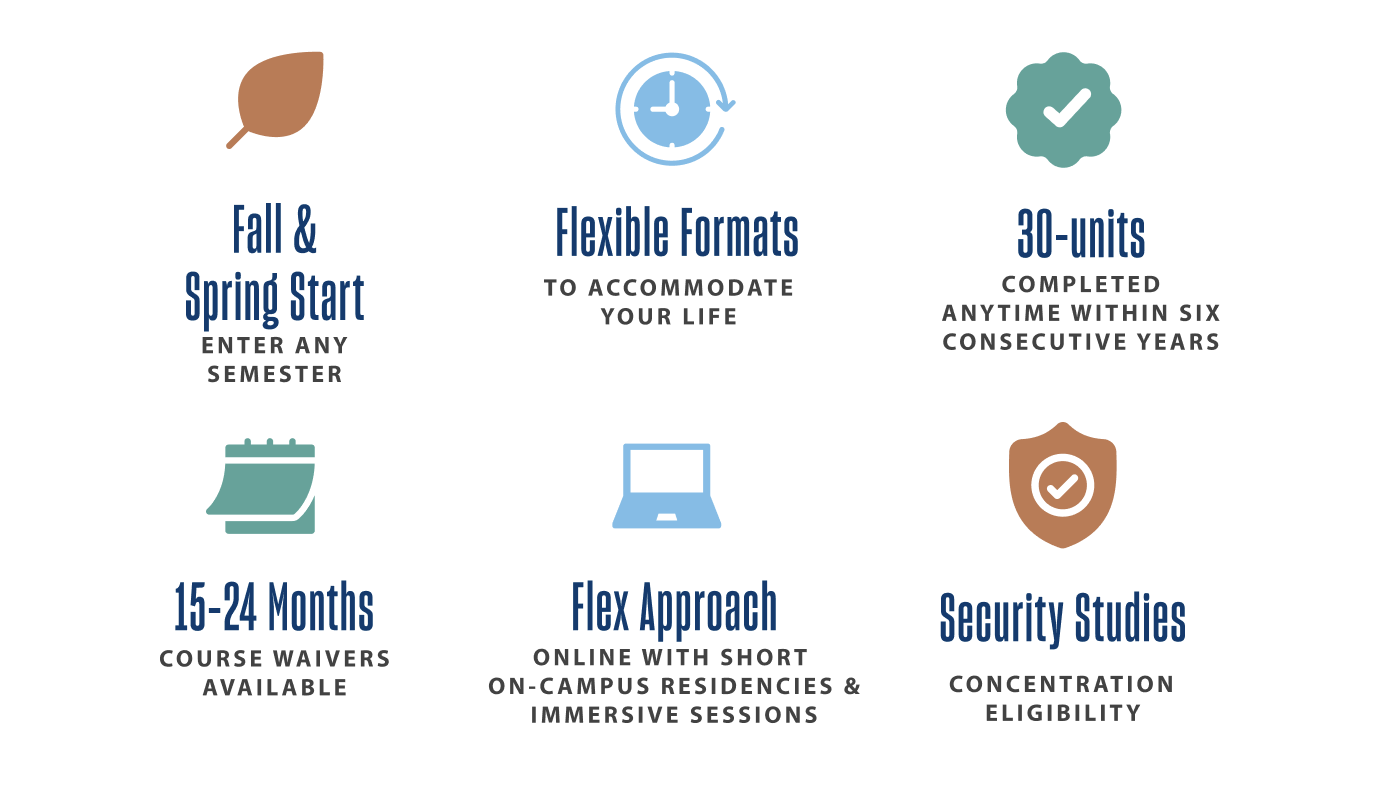
###### **The 30-unit Flex MSCMR program can be completed in 15-24 months. Full-time, part-time, and hybrid options are available. **

What Makes Kroc's MSCMR Program Unique?
- The only Peace Studies School on an international border
- Globally diverse student and alumni population from over 50 countries
- Explicit focus on identity-based conflict (ethnic, racial, national, gender and religion)
- Emphasis on human skills (dialogue, critical thinking, ethnography and trauma-informed practice)
- Scholar-practitioner professors actively engaged in applied peacebuilding
- Competitive fellowships and graduate assistantships offered
- Multidisciplinary approach that fosters creative and effective approaches to seemingly intractable situations
- Ongoing experimentation simulation and practice throughout the program
- Experiential learning opportunities in locations such as Colombia, Rwanda, Armenia and Mexico
- Focused study of organizational conflict using theories and real-world cases to uncover its root causes
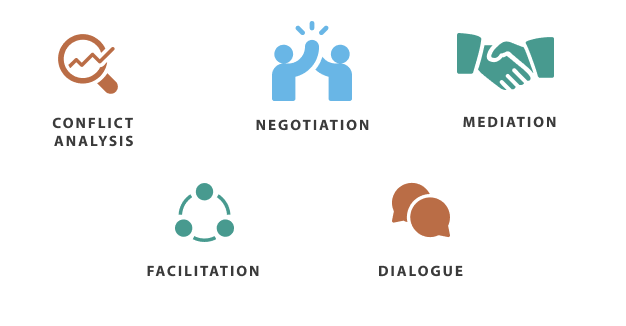
Tangible Skills Taught and Gained
Unique Courses That Inspire
Conflict Management and Resolution students learn conflict management skills and pursue a wide variety of careers across industries.
Some of our featured courses include:

Sample MSCMR Course Schedule
FALL \[YEAR 1\]
SPRING \[YEAR 2\]
FALL \[YEAR 2\]
FALL \[YEAR 1\]
Foundations: Peace, Justice & Social Change
3
Required
Conflict Analysis & Resolution
3
Core
Mediation
3
Skills & Methods
Restorative Justice Workshop
1
Elective
TOTAL
10
Required
[Explore Our Curriculum Guide](https://krocresources.sandiego.edu/peace/master-of-science-in-conflict-management-and-resolution-program-course-guide-kroc-school?_gl=1*1moan4f*_gcl_au*MTM1MDU4MDk4Ni4xNzI3ODc2NjM0&hsLang=en)
SPRING \[YEAR 2\]
Intervention Design
3
Core
Facilitation & Dialogue Skills
2
Elective
Program Design, Monitoring & Evaluation
3
Skills & Methods
Intercultural Competency
2
Elective
Professional Portfolio
1
Required
TOTAL
11
Required
[Explore Our Curriculum Guide](https://businessstories.sandiego.edu/the-future-and-outlook-of-supply-chain-management?hsLang=en)
FALL \[YEAR 2\]
Intervention Design
3
Core
Facilitation & Dialogue Skills
2
Elective
Program Design, Monitoring & Evaluation
3
Skills & Methods
Intercultural Competency
2
Elective
Professional Portfolio
1
Required
TOTAL
11
Required
[Explore Our Curriculum Guide](https://businessstories.sandiego.edu/the-future-and-outlook-of-supply-chain-management?hsLang=en)
MSCMR Admission Requirements
Application Deadline
**See website for details**
Minimum GPA
3.0 (4.0 scale) in all undergraduate course work
Additional Requirements
- Essay response to prompts
- Professional Resume
- Two Letters of Recommendation
- Official Transcripts
- No GRE Required
International Students
Review the Graduate Admissions website for additional required application materials.
[Application Deadline Information](https://krocstories.sandiego.edu/peace/the-innovating-peace-blog/the-heart-of-peacebuilding-women-peacemakers-on-their-fellowship-experience?hsLang=en)
[MSCMR Tuition & Financial Aid](https://krocstories.sandiego.edu/peace/the-innovating-peace-blog/the-heart-of-peacebuilding-women-peacemakers-on-their-fellowship-experience?hsLang=en)
MSCMR Graduate Requirements
Requirements
- Full-time or part-time status as a graduate student
- Approval of courses by faculty advisor
- Mandatory orientation
- 30 units of graduate work with a cumulative 3.0 GPA or higher
- Foundations: Peace, Justice & Social Change course (3 units)
- Core courses (6 units)
- Skills and methods courses (at least 6 units)
- Electives\*\* (at least 11 units)
- Professional portfolio with a “B” or better (1 unit)
\*\*Electives are chosen in consultation with a faculty advisor. Up to 6 units ofcoursework may be taken outside of the Kroc School. A maximum of 3 different 1-unit pass/fail electives can be taken, unless a faculty advisor approves otherwise.
# Begin Your Conflict Resolution Journey at The Kroc School
Graduates have enrolled in the MSCMR program from around the world with a wide range of educational backgrounds and professional disciplines including non-profits, government agencies, advocacy organizations, the military, the arts, media, science and education and more. Immerse yourself in this diversity and gain a range of perspectives, empathy-building and stimulate your creative problem-solving.
The world needs more peacebuilders like you. Hone the skills and knowledge to guide your colleagues and communities through conflict ethically and effectively.
[Explore the Graduate Certificate in Mediation and Conflict Resolution](https://www.sandiego.edu/peace/academics/certificates/)
[Book a Meeting with Admissions](https://krocresources.sandiego.edu/meet-admissions?hsLang=en)
[Request More Information](https://krocresources.sandiego.edu/peace/request-more-information?_gl=1*1dw3m5m*_gcl_au*MTM1MDU4MDk4Ni4xNzI3ODc2NjM0&hsLang=en)
[Begin Your Application](https://usd.liaisoncas.com/applicant-ux/#/login)
### Joan B. Kroc School of Peace Studies
[Joan B. Kroc Institute for Peace & Justice](https://www.sandiego.edu/maps/?id=357&mrkIid=78531)5998 Alcalá Park
San Diego, CA 92110
[(619) 260-7919](tel:(619)%20260-7919)[krocschool@sandiego.edu](mailto:krocschool@sandiego.edu)
[View Directory](https://www.sandiego.edu/directory/?alpha=&expert=&division_id=NaN&office_department_id=39&sub_department_id=NaN&sub_unit_id=NaN&user_type=&list_view_type=box-view&filter_type=&group_id=&show_image=&details_button=hide-details-button&row_limit=24&state=NaNamp;&usd_expert_keyword=&department_filter_type=0&filter_action=clicks)
## Helpful links
- [Maps & Directions](https://www.sandiego.edu/maps/)
- [Request Info](https://www.sandiego.edu/admission-and-aid/undergraduate/connect/)
- [Jobs at USD](https://www.sandiego.edu/jobs/)
- [Make a Gift](https://www.sandiego.edu/giving/)
- [Apply](https://www.sandiego.edu/admission-and-aid/)
- [Degrees & Programs](https://www.sandiego.edu/academics/)
- [Colleges & Schools](https://www.sandiego.edu/academics/college-and-schools.php)
- [Offices & Departments](https://www.sandiego.edu/directory/)
- [Education Partners](https://www.fst.edu/)
- [Libraries](https://www.sandiego.edu/academics/libraries.php)
[Web Privacy](https://www.sandiego.edu/its/about/policies/#accordion-panel3) [Accessibility](https://www.sandiego.edu/its/about/policies/#accordion-panel25) [Website Redesign](https://www.sandiego.edu/brand/web-and-mobile/redesign/) [Emergency](https://www.sandiego.edu/emergency/)